


 Raphaël Forns, Kanada


Info
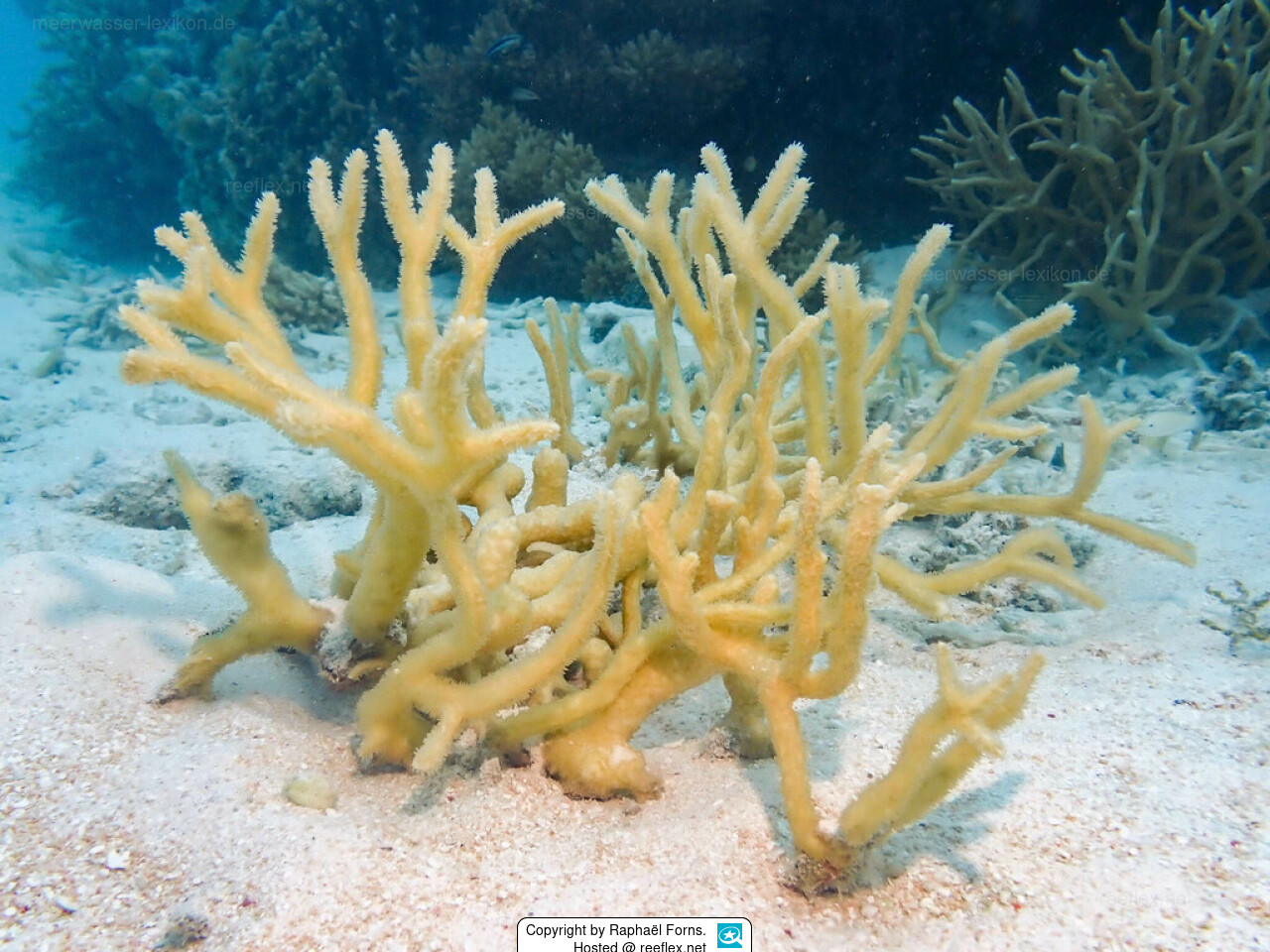
Hydnophora rigida (Dana, 1846)
Description: Colonies are composed of irregular, usually flattened branches with or without encrusting bases. Monticules are usually fused into ridges down branch sides. Main branches are 7-12 millimetres thick.
Similar Species: Hydnophora grandis, especially where colonies are exposed to wave action.
Synonymised names
Clavarina composita Rehberg, 1892 · unaccepted > junior subjective synonym
Hydnophora (Clavarina) rigida (Dana, 1864) · unaccepted > superseded combination
Hydnophora breviconus Nemenzo, 1971 · unaccepted > junior subjective synonym
Hydnophora columellata Rehberg, 1892 · unaccepted > junior subjective synonym
Hydnophora laxa (Dana, 1846) · unaccepted > junior subjective synonym
Hydnophora mayori Hoffmeister, 1925 · unaccepted > junior subjective synonym
Hydnophora ramosa Nemenzo, 1959 · unaccepted > junior subjective synonym
Hydnophora rigida var. ramosa Nemenzo, 1959 · unaccepted > junior subjective synonym
Hydnophora rigida var. solida Chevalier, 1975 · unaccepted > junior subjective synonym
Merulina laxa Dana, 1846 · unaccepted > junior subjective synonym
Merulina prolifera Quelch, 1886 · unaccepted > junior subjective synonym
Merulina rigida Dana, 1846 · unaccepted > junior subjective synonym (basionym)
Direct children (2)
Variety Hydnophora rigida var. ramosa Nemenzo, 1959 accepted as Hydnophora rigida (Dana, 1846) (unaccepted > junior subjective synonym)
Variety Hydnophora rigida var. solida Chevalier, 1975 accepted as Hydnophora rigida (Dana, 1846) (unaccepted > junior subjective synonym)
Description: Colonies are composed of irregular, usually flattened branches with or without encrusting bases. Monticules are usually fused into ridges down branch sides. Main branches are 7-12 millimetres thick.
Similar Species: Hydnophora grandis, especially where colonies are exposed to wave action.
Synonymised names
Clavarina composita Rehberg, 1892 · unaccepted > junior subjective synonym
Hydnophora (Clavarina) rigida (Dana, 1864) · unaccepted > superseded combination
Hydnophora breviconus Nemenzo, 1971 · unaccepted > junior subjective synonym
Hydnophora columellata Rehberg, 1892 · unaccepted > junior subjective synonym
Hydnophora laxa (Dana, 1846) · unaccepted > junior subjective synonym
Hydnophora mayori Hoffmeister, 1925 · unaccepted > junior subjective synonym
Hydnophora ramosa Nemenzo, 1959 · unaccepted > junior subjective synonym
Hydnophora rigida var. ramosa Nemenzo, 1959 · unaccepted > junior subjective synonym
Hydnophora rigida var. solida Chevalier, 1975 · unaccepted > junior subjective synonym
Merulina laxa Dana, 1846 · unaccepted > junior subjective synonym
Merulina prolifera Quelch, 1886 · unaccepted > junior subjective synonym
Merulina rigida Dana, 1846 · unaccepted > junior subjective synonym (basionym)
Direct children (2)
Variety Hydnophora rigida var. ramosa Nemenzo, 1959 accepted as Hydnophora rigida (Dana, 1846) (unaccepted > junior subjective synonym)
Variety Hydnophora rigida var. solida Chevalier, 1975 accepted as Hydnophora rigida (Dana, 1846) (unaccepted > junior subjective synonym)


